

If you suffer from chronic joint pain, you might find it increasingly hard to perform everyday movements. Whether the discomfort is due to arthritis, an old injury or simply the aging process, chronic joint pain can impact your lifestyle and general well being.
Pain medications and topical treatments may help temporarily relieve symptoms, but they generally do not treat the underlying cause of joint damage and inflammation.
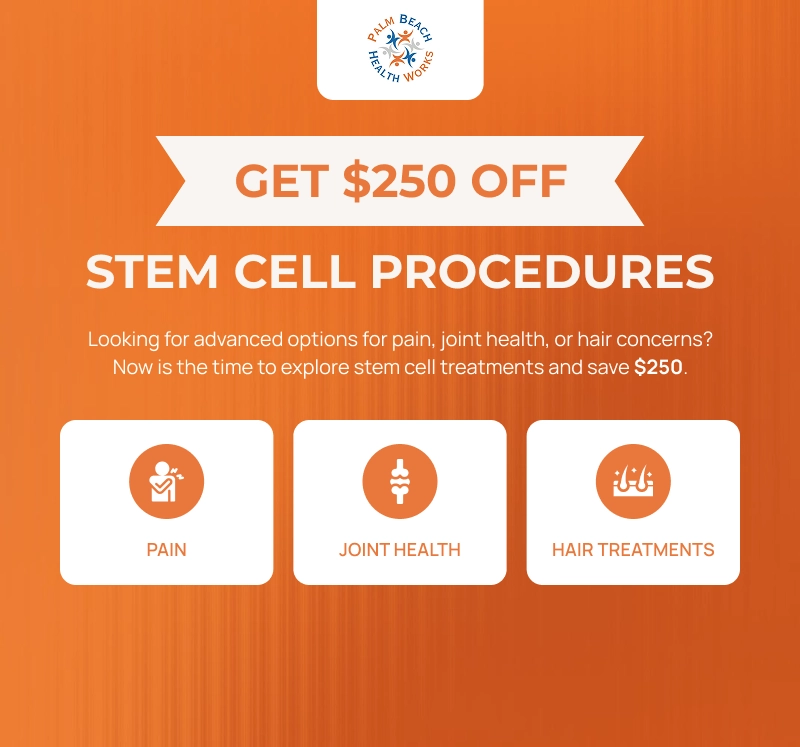
Palm Beach HealthWorks provides regenerative treatments that facilitate the body’s natural healing process. Stem cell and exosome therapies can help lower inflammation, facilitate tissue repair, restore joint functionality and allow Westlake people to regain comfort and confidence in doing their daily activities.
Common Causes of Joint Pain
Joint pain can happen for lots of reasons. Arthritis, trauma, wear and tear of joints etc. Osteoarthritis is caused by the gradual wear and tear of the cartilage, while rheumatoid arthritis is an inflammatory process that can damage normal joint structures. Chronic joint pain can also be caused by injuries (sprains, fractures) and repetitive physical stress (sports, manual work).
Chronic joint pain can have a great effect on one’s day to day life. A lot of people have difficulty carrying out everyday tasks and remaining active or working in a comfortable manner. Decreased mobility can affect emotional well-being as pain and stiffness increase, making it harder to maintain an active, independent lifestyle.
Traditional Remedies Fail to Reduce Pain
The usual treatment for joint pain involves rest, medications, physical rehabilitation and lifestyle changes. Many people begin with over the counter anti-inflammatory medications to help with pain and swelling during daily activities.
Therapists often recommend personalized exercise programs to improve joint flexibility, strengthen the muscles around the joint, recover functional movement, and reduce stiffness.
Weight loss may also help reduce the stress on the joints, especially in people with knee osteoarthritis. But if the symptoms continue to progress, surgical joint replacement may ultimately be indicated.
These options can be helpful for relieving symptoms, but they tend to focus on managing pain rather than repairing the damaged tissue. In many patients discomfort recurs, eventually limiting long term gains in mobility and joint function.
How Stem Cells Alleviate Pain and Support Healing
The goal of regenerative stem cell therapy is to reduce inflammation and encourage tissue healing to help repair damaged joints. Stem cells also affect the immune system, promoting healing and reducing inflammation. They can help rebuild connective tissue. It is a more holistic approach to address the root cause of joint problems, rather than the symptoms.
As the injured tissue begins to recover, many patients find they are more mobile and less uncomfortable. Regenerative medicine seeks to replace diseased tissue with healthy tissue in affected joints; stem cell therapy, in particular, may offer more long-term benefits than pain-relieving treatments that do not target the source of the problem.
Exosomes are naturally occurring extracellular vesicles that play an important role in intercellular information exchange. They are rich in proteins, signaling molecules and growth factors, and they coordinate tissue repair and support the body’s natural healing response where regeneration is needed.
Scientists are still investigating how exosomes may impact the behavior of cells involved in response to joint injury and inflammation in osteoarthritis. Using these biological processes to modulate damaged joint tissue health and function may be of benefit.
Exosomes are able to be employed as a targeted delivery vehicle for therapeutic agents in order to deliver the treatment to specific cells more effectively. This regenerative approach holds promise for stimulating cartilage repair and long-term joint health.
Combining Stem Cells and Exosomes for Pain Management
Combining stem cell and exosome therapy can help address causes of joint pain and loss of mobility. Unlike conventional treatments, these regenerative treatments don’t just mask symptoms but also help reduce inflammation and promote the repair of damaged tissues, potentially helping to restore natural joint strength and function.
Both therapies have the potential to promote tissue healing and reduce inflammation that can lead to cartilage breakdown. Those with osteoarthritis, and similar conditions, often consider these as alternatives to surgery that may provide long-term improvements in comfort and mobility.
Most patients return to their daily routines with little disruption following treatment and recovery is usually minimal. Regenerative medicine also benefits from short recovery times because patients want an effective treatment without long periods of downtime.
Frequently Asked Questions: Joint Pain Therapy in Westlake, FL
Are stem cell and exosome therapies invasive?
In most cases, no. These minimally invasive treatment options generally require little or no recovery time, making them a convenient alternative for many patients seeking joint pain relief.

Do these types of therapy replace surgery in Westlake, FL?
Everyone is different. Stem cell and exosome therapy have become popular with many patients who have found these regenerative therapies to be effective in relieving joint pain and improving function, and some have even delayed or eliminated the need for joint replacement procedures.
How long does recovery take?
Many people want to avoid surgery and are interested in stem cell and exosome therapy because there is usually little recovery. The body heals itself naturally and most people can get back to many normal activities soon after treatment.
How are stem cells administered?
The delivery of stem cells can be done using different approaches depending on the particular medical condition. The most common technique involves direct injections, although intravenous therapy and surgical placement are additional options that can be used in certain situations.
Are there risks with these types of therapy?
Just like any medical treatment, there are risks associated with regenerative therapies. Side effects can include infection, bleeding, immune system reactions or abnormal growth of tissue. The risks depend on the treatment method, processing techniques, and the type of regenerative cells used.
How long before you can expect to see results?
There is no set time frame. Every patient is different. Some people might see early improvements within a few weeks after a full assessment and a tailored treatment plan, while others might need several months to see gradual improvement.